Key takeaways
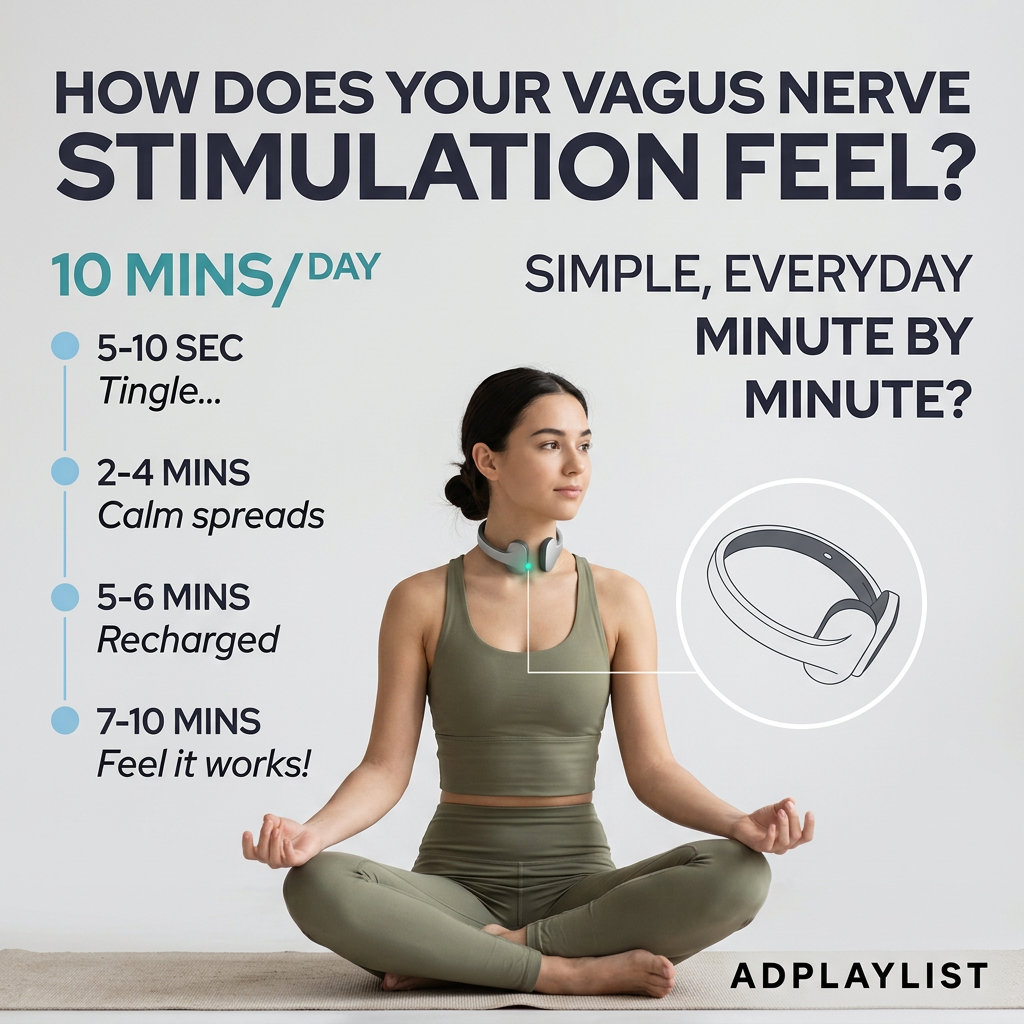
- Format: Sensation timeline with a lifestyle model and product zoom.
- Best for: Unfamiliar products where the experience needs explaining.
- Hook: What you'll feel in each minute of a 10-minute session.
- Reuse it: Map your product's experience as a short timeline beside someone using it.
Available sizes
What is a feature callout ad?
A feature callout ad is a static image that shows a single product with short text labels pointing to its key features or benefits, usually joined to the product by thin lines. It explains several selling points at a glance without a long caption, which is why it's common for supplements, skincare, electronics and kitchenware.
See all feature callouts ads →Why this feature callouts ad works
- 01
Answers the real question
People hesitate on new tech because they don't know how it will feel, and the headline addresses that directly.
- 02
Timeline sets expectations
Concrete time markers make the effect feel predictable and achievable.
- 03
Low time commitment
'10 mins/day' signals the habit is easy to fit into any routine.
- 04
Product zoom
The circular illustration shows the device clearly even though it's small on the model.
Full creative breakdown
Who this ad targets
Stressed professionals, wellness enthusiasts and biohackers aged 25–50 who practice, or are curious about, meditation, breathwork and nervous-system regulation. They have heard of the vagus nerve but are unsure about devices. The calm yoga setting also targets women interested in holistic, drug-free support for stress, mood and sleep. Yoga studio members and meditation app subscribers are especially strong interest segments.
Copywriting analysis
The headline poses a question that mirrors what prospects are searching for, drawing them in. The timeline uses very short sensory words — tingle, calm, recharged — that make the experience tangible. “10 mins/day” is a clear, low-effort promise. However, the copy has rough spots: “How does your vagus nerve stimulation feel?” and “Simple, everyday minute by minute?” read awkwardly, and “Feel it works!” is ungrammatical. Tightening these lines would improve credibility. Avoid implying medical outcomes in captions. A grammar pass would go a long way here.
Visual design
The model is centered and calm, anchoring the layout with a stable triangular pose. The timeline on the left and the product circle on the right balance the composition. Teal and light-blue dots create a vertical rhythm, while the navy headline adds authority and the muted olive outfit keeps the palette earthy. The green light on the device echoes the timeline's cool accents, guiding the eye from product to experience.
How to adapt this template for your brand
- Break your product's experience into three to five time-based stages.
- Describe each stage with one short sensory word or phrase.
- Show a calm model using the product in the center.
- Add a circular zoom-in illustration of the device.
- Use a question headline that mirrors what customers ask.
Tips for mental wellness ads on Meta
Works on Meta Feed and Instagram for awareness and consideration. Wellness devices can face health-claim review, so avoid medical language such as 'treats anxiety'. Turn the timeline into a short Reel with a real user describing each stage. Target meditation, yoga, breathwork and biohacking interests, then retarget viewers with testimonials. A short UGC-style clip of someone describing the tingle and the calm can also work well on TikTok.
About this creative
This square ad for a wearable vagus nerve stimulator uses a light grey studio backdrop. A young woman in an olive sports top and leggings sits cross-legged in a meditation pose, wearing a grey collar-style device around her neck with a small green light. A thin line connects the device to a white circle on the right containing a line illustration of the product. At the top, a bold navy uppercase headline asks how vagus nerve stimulation feels. On the left, a teal label states “10 mins/day” above a vertical timeline with four points: a tingle in the first seconds, calm spreading at two to four minutes, feeling recharged at five to six minutes, and feeling it work at seven to ten minutes. On the right, a second line describes the experience as simple and everyday, minute by minute. The ad demystifies a new technology by describing the experience step by step.
Meta ad · 1200 × 1200 · Mental Wellness
Vagus Nerve Device Ad: A Minute-by-Minute Timeline
This ad answers a common question, how vagus nerve stimulation feels, with a minute-by-minute timeline beside a woman meditating while wearing a neck device. A circular zoom shows the product. It's a template for new or unfamiliar products where explaining the experience removes hesitation.
Added
All brand names and logos are property of their owners. Adplaylist is not affiliated with or endorsed by these brands.
Details
Ad copy
Primary text
Just 10 minutes a day. First a gentle tingle, then calm spreading through your body, then a recharged, reset feeling. ADPLAYLIST's wearable vagus nerve device makes daily stress relief simple.
Description
10 minutes a day to feel calmer.
On-image text
How does your vagus nerve stimulation feel? | 10 mins/day | 5-10 sec Tingle... | 2-4 mins Calm spreads | 5-6 mins Recharged | 7-10 mins Feel it works! | Simple, everyday minute by minute? | ADPLAYLIST
Headline ideas for this template
- 110 Minutes a Day to a Calmer You
- 2What Vagus Nerve Stimulation Really Feels Like
- 3From Tingle to Calm in Minutes
- 4Your Daily Nervous System Reset
- 5Stress Relief You Can Feel Minute by Minute
Meta image ad specs
| Placement | Ratio | Size (px) |
|---|---|---|
| Feed | 1:1 or 4:5 | 1080×1080 / 1080×1350 |
| Marketplace | 1:1 | 1200×1200 |
| Messenger inbox | 1:1 | 1200×1200 |
| Stories & Reels | 9:16 | 1080×1920 |
This template is 1:1. Request 4:5 or 9:16 to cover all placements.
Browse similar by tag