Key takeaways
- Format: Stat-led feature callout over a product pile
- Best for: Adding rational proof to sustainability messaging
- Hook: A concrete percentage that quantifies the benefit
- Reuse it: Swap in a sourced stat that matches your product
Available sizes
What is a feature callout ad?
A feature callout ad is a static image that shows a single product with short text labels pointing to its key features or benefits, usually joined to the product by thin lines. It explains several selling points at a glance without a long caption, which is why it's common for supplements, skincare, electronics and kitchenware.
See all feature callouts ads →Why this feature callouts ad works
- 01
Numbers stop the scroll
A specific percentage feels credible and stands out in an emotional category.
- 02
Familiar trash
Recognisable snack packaging connects the abstract stat to the viewer's kitchen.
- 03
Honest hedge
Using about avoids overclaiming and keeps the tone trustworthy.
- 04
Clean separation
Text and image sit in separate panels so neither competes.
Full creative breakdown
Who this ad targets
The ad targets analytical, fact-driven eco-conscious adults who want to know that their effort actually makes a difference. These are people who may doubt recycling claims and respond better to data than emotional appeals. It also suits snack-heavy households, students and young families. The stat makes it useful for retargeting people who engaged with emotional ads but haven't converted yet.
Copywriting analysis
The headline is built around comparison: recycled plastic versus plastic made from oil. Mentioning oil quietly links plastic to fossil fuels, adding environmental weight without lecturing. The number 40% is the hero, while about keeps the claim modest. Because the sentence is longer, it runs across three balanced lines that are still easy to read. The copy doesn't mention the brand or the service; it simply provides a reason to care, and the primary text offers the action of home pickups and keeping plastic out of the landfill.
Visual design
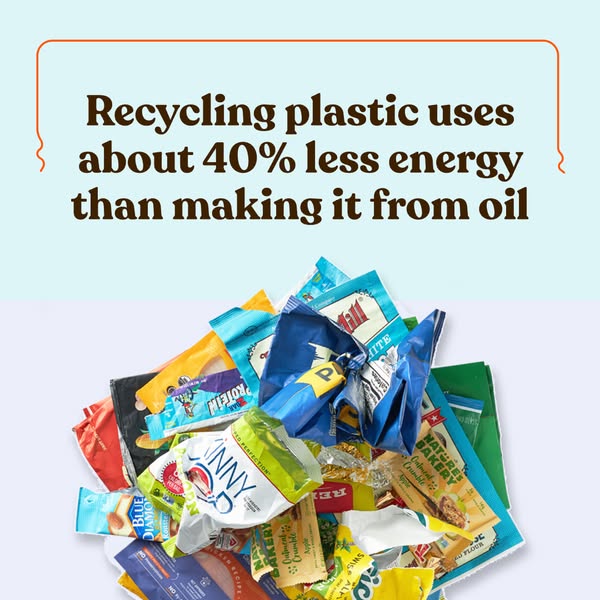
Two pastel panels, aqua for text and lavender for the image, keep the layout calm. The hand-drawn orange frame around the headline matches the Ridwell visual system. The cut-out pile of snack packaging is bright, saturated and slightly chaotic, which contrasts with the clean text block. Rendering the pile without a background makes it feel like an object rather than a scene, focusing attention on the trash itself.
How to adapt this template for your brand
- Find a credible, sourced statistic tied to your product's benefit
- Write it as a comparison with the alternative
- Photograph a cut-out pile of the items your product handles
- Place the stat in a framed text panel above the image
- Add the source in the primary text or landing page
Tips for recycling ads on Meta
Run this square creative in Meta Feed on Facebook and Instagram, where 1:1 fills the screen without cropping. Keep the on-image headline in the top half so it stays readable in the preview. Pair it with a Learn More or Sign Up button and a zip-code-targeted audience, because Ridwell only serves selected US cities. Rotate it with two or three sibling cards from the same set every two weeks to avoid ad fatigue, and test Advantage+ placements against Feed-only.
About this creative
This square ad puts a single statistic front and centre. The top half is a pale aqua panel with a thin orange hand-drawn frame and a three-line dark-brown serif headline: Recycling plastic uses about 40% less energy than making it from oil. The lower half shows a cut-out pile of crumpled, brightly coloured snack wrappers, chip bags, flour packets and food pouches on a lavender background, all multi-layer plastics that usually go straight to the bin. Recognisable packaging shapes and logos make the pile feel familiar and real. The visual says this is your everyday trash, and the headline tells you what recycling it achieves. There is no brand logo or offer, keeping the ad educational. The word about softens the number, an honest hedge. Advertisers reusing this layout should only use statistics they can source, since environmental claims in ads face scrutiny.
Meta ad · 338 × 600 · Recycling
Recycling Plastic Uses 40% Less Energy Stat Ad
This square stat-led ad from Ridwell places a single statistic above a pile of colourful snack wrappers: recycling plastic uses about 40% less energy than making it from oil. It uses a fact to justify the habit. Use the format to add rational proof to an emotional category.
Added
All brand names and logos are property of their owners. Adplaylist is not affiliated with or endorsed by these brands.
Details
Ad copy
Primary text
Wasting less, made easy. Get pickups from your 🏠 Keep stuff out of the landfill 🌿 Do good in your community ❤️ Save the 🌎
Description
Recycle snack wrappers from home
On-image text
Recycling plastic uses about 40% less energy than making it from oil
Headline ideas for this template
- 1Recycled plastic saves about 40% energy
- 2Your snack wrappers can save energy
- 3Less oil, more recycling
- 4Why recycling plastic is worth it
- 5Make plastic from plastic, not oil
Meta image ad specs
| Placement | Ratio | Size (px) |
|---|---|---|
| Feed | 1:1 or 4:5 | 1080×1080 / 1080×1350 |
| Marketplace | 1:1 | 1200×1200 |
| Messenger inbox | 1:1 | 1200×1200 |
| Stories & Reels | 9:16 | 1080×1920 |
This template is 1:1. Request 4:5 or 9:16 to cover all placements.